Tuesday, August 24, 2010

My Coach


You may have asked yourself, "How does that Tricia do it?  How, exactly, did she grasp her creative life back from the swamp of motherhood?  How does she juggle all of those plates in the air, while standing on her head?"  If you have ever wondered, the answer is simple:  I have a lot of help.

For example, I have a creativity coach. Her name is Katherine Torrini, and we have been working together for almost a year and a half.  Mostly we talk on the phone, and sometimes we meet in person.  Since we began our relationship, I have accomplished many goals.  I have  successfully established routines around practicing and writing and also begun performing again.  However, these outward actions are merely the blossoms, the outcome of extensive inner discovery.  Katherine has supported me in questioning the way I feel and talk to myself about creating, helping me to remove real and perceived obstacles to getting to work. 

My favorite things about Katherine are her enthusiasm and her empathy.  She has the ability to meet me wherever I am on a given day.  The best thing about coaching is that it is my investment in my creative life.  I do it to strengthen me in remembering and making time for the most important and life-giving parts of myself. 

In October, I will be joining a new coaching group, led by Katherine.  If you live in Austin and are interested in investing in your creative life--which is to say, connecting with your truest self--maybe you'd like to join us?  Group coaching is more affordable than individual coaching, plus you will get the benefit of having a team.  The 3-month group will meet, in person, twice a month on Thursdays beginning October 7th, from 9:30-11:30 a.m.  Please contact Katherine, via her website, for more information!

Sunday, August 08, 2010

Snippetwriter


I've had a lot of great breakthroughs this year. For one thing, I shocked myself by getting a regular, twice-monthly gig at Momo's.  And it really does get better and better, more and more fun, each time.  A couple of weeks ago, I met with a music publicist, Cash Edwards, who gave me a ton of great advice and suggestions about working with the local press to get more folks on my bandwagon.


I also have some great stuff coming up. In early October, for example, I'll be attending Tom Jackson's Live Music Performance Bootcamp in Nashville.  It's my first trip to Nashville, and since I'm a songwriter, I feel a bit like Dorothy in the Wizard of Oz, heading off to the Emerald City.  Only it's me who's green!

I'm writing away, fantasizing about having a purseload of new songs, with which to knock off everyone's cowboy boots.  But I find I'm just not finishing songs right now.  I don't really like that.

The other night, I had my Songwriter Date Night, and I took some time to look back over my big songwriting notebook.  As I flipped through it, I saw that I have a ton of snippets--ideas, unfinished bits, etc.  I also saw a few instances where I worked on songs for awhile, several times, before I managed to "finish" the song.  These are songs I play live now, and I got to go back and see how I started them four or five different times before I came to the version that turned into the "finished" one.  Each time, I added more depth and exploration and came to a clearer sense of what I was trying to do with the song.

I'm choosing to embrace the snippets.  To see myself as a snippet writer, not a songwriter, and trust that the snippets will lead me on.  If I get all freaked out, I put pressure on myself to finish things.  But I don't want to miss out on the depth. 

Thursday, July 22, 2010

I Heart Creative Moms

This is a YouTube video by Mom's Rhap(sody). It's a parody of Queen's "Bohemian Rhapsody." These women totally have my heart, because they're taking their everyday life and making art out of it. Brilliant, funny, nuts. Their kids are lucky. (Thanks to my friend John Winfrey for passing this on).


Thursday, June 17, 2010

Approximating Fairness

                                                                     photo: Luke Sharrett/The NYTimes

This morning, as is usual when I run errands, I was listening to the radio.  Today's top story:  BP Chief Executive Tony Hayward's appearance before a House panel to discuss the recent oil disaster in the Gulf of Mexico.  There weren't a lot of details at that point, but without hearing too much, I knew some of what to expect.  From our representatives, I assumed there would be high emotion, tough questions for Mr. Hayward, as well as opportunities to publicly declare--and for all of their constituents to witness--strong stances on the disaster.  From Mr. Hayward, I expected an apology and careful side-stepping of legally treacherous details.


This is how we do it when things go wrong.  Does it work?  Does it help?  I hope so.  Over the past two months since the Deepwater Horizon explosion, I have heard a lot of people, with much good reason, condemn BP, the oil industry, and corporations in general.  I've heard expressions of satisfaction that BP and its shareholders have seen their stock plummet in value.  I've heard a lot of folks express sadness, anger, and helplessness about the extent of the damage.  Some are tired of greedy executives.  Others, even those who drive gas-powered cars and enjoy the convenience of petroleum-based plastic products, have grown tired of the drawbacks of fossil fuels.

It's a relief, and a luxury, to have someone to be the target of all of that rage.  I envisioned another scenario, in which God was invited to appear before a similar committee.   I imagined outraged representatives presenting equally blistering questions on the technical aspects of various earthquakes, tsunamis, floods, hurricanes, and that obnoxious volcano that grounded European air travel for a week or so back in April: "Why does the Earth's mantle have faults, anyway?"  "Why must the continents drift?"  "What, exactly, did You know, and what did You do or neglect to do to protect innocent people?"  I imagined a "shakedown" in which God was summoned to the president's office and pressured to establish an e$crow account for the victims of His disasters.  I imagined the factions building on each side--one side defending, the other accusing--according to whether He had contributed to or doomed their political campaigns.  

I also imagined the outcry that might ensue if God failed to appear, which He has been known to do, at least in my experience.

I intend no disrespect to the residents of the Gulf Coast Region.  Nor do I intend to minimize the gravity of the destruction of life and property caused by this tragic disaster.  I just wonder about the productivity of the media frenzy.  No doubt, Tony Hayward wishes for a way to click the "Undo" button, to somehow have the power and capacity to make it up to the sea, the birds, the fishes and shrimp, and the fishermen and shrimpers who make their livelihood on the Gulf.  Not to mention BP shareholders.  Or the families of the 11 crew members who were killed.  Fairness isn't so easily found.  And so, in a scenario of specialized knowledge, expensive technology, mind-numbing devastation, and slow progress, we grope for fairness as best we know how.

Monday, April 26, 2010

Wednesday, March 24, 2010

My Comeback Gig


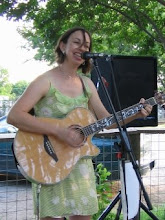
A couple of weeks ago, I played on stage for the first time in about three years.  While I have kept up writing, singing, and playing, I have taken a big ol' hiatus from performing since my daughter was born.  My "comeback gig" was a truly wonderful experience.  I had a great turnout of loving and supportive friends from my whole life in Austin.  I am so grateful for everyone who came out and helped create the festive and electric vibe.  Special thanks to my pal Renee Trudeau, who wrote a blog post about my show!

I loved playing at Momo's--it was my first time to play there.  I love the stage, the sound system, the fun indoor/outdoor space, and I loved the gorgeous weather we had that day.  My set wasn't perfect, but I knew it wouldn't be.  I had spent weeks working to remember my old songs, to write a new song, and I challenged myself to try out some guitar leads on about five of the songs. There are so many balls to keep in the air when you're doing it on your own, as I am.  Overall, I was really proud of myself.  Now I just have to replicate and improve it, over and over.

We had fun.  I gave out free CDs to everyone in the audience.  I sang a song about cookies.  Since I’m on this big scrapbooking kick, I had people sign a guest book to commemorate the night.  And I had a contest where folks could have a chance to win a $50 gift certificate to Waterloo Records if they named other artists who I sound like.  Want to know what they said?  My fans said I sound like early Jewel, Carrie Underwood, Leonard Cohen, Joni Mitchell, Tori Amos, Suzanne Vega, Sheryl Crow, Colbie Callait, Sarah McLachlan, the Indigo Girls, and Joan Baez. Wow!

They used these words to describe the show: “smokin’ hot,” “beautiful,” “amazing presence,” “grounded in life,” “sweet,” “from the heart,” “hilarious,” and “inspiring.”

This is my dream!  To listen, to write, to play, and to sing.  To make space for all of the things that we don't always talk about, but need to feel, once in awhile.  To explore the connection between audience and performer.  To experience the power of music.  And to have fun.  There, I said it.  I don't know why I have this dream, but I am committed to showing up to see where it leads me.   If you are reading this, I hope you will join me when I perform. My next Momo's Happy Hour is Tuesday, April 27th, 5:15-6:15!

Thursday, February 25, 2010

Live at Momo's Happy Hour!


It's my debut at Momo's. It's my first public performance in over three years. It's my return to the stage after a "hiatus" known as motherhood. It's your chance to hear some old songs and some new songs. Bring your smile. Bring your heart--get ready for me to climb inside!

Wed. March 3rd.  5:15-6:15 p.m. 618 W. 6th Street.


Sunday, February 21, 2010

What Makes Me a Good Mom?


First of all, I don't want to be a good mom.  I want to be an excellent mom.  I don't have to be perfect to be excellent.

So what makes me an excellent mom?
1.  An excellent mom is awake, present, open, and responsive.
2.  An excellent mom takes care of herself.  She has a self and a life.
3.  An excellent mom knows when to lead and when to follow her kids' lead.
4.  An excellent mom controls the pace and stress of the house.  She knows when to push and when to put on the brakes.  She doesn't overschedule herself or her kids!  She knows it's important to have time to putter.  She knows when it's time for a treat, a break, a bubble bath, or a backrub.
5.  An excellent mom is creative.  She creates "home," schedule, nourishment, nurturing, learning experiences, and perspective.
6.  An excellent mom is centered enough to weather the storms of her kids' feelings without getting sucked in.
7.  An excellent mom shares her joys, her struggles, her triumphs...not in a burdensome way, but in an informative way:  "this is what life is like...you try things..sometimes it works/feels good, sometimes it doesn't.  and you try again."
8.  An excellent mom has a network of support.  She doesn't try to do it all alone.


As kids, and as adults, who do I want them to be?
1. I want them to like themselves.  I want my kids to know who they are and what is right for them.  Sure, they can take time to arrive at that place, and they can make mistakes in the process.  But I want them to know that they have a place in the world, that they belong, just as they are.

2. I want them to be problem solvers.  I want them to develop tools to figure it out and/or ask for help.  I want them to be able to take something big and break it down into steps.  I want them to be confident to make decisions, to take risks, to try new things, and to learn and move on when/if something doesn't work.

3. I want them to dream big.  I want to provide an example to them that shows that dreams are real.  I want to help them to find the thing(s) inside of them that thrill them, and to make that into what they contribute to the world and make their livelihood from.

Monday, February 15, 2010

My Guru


It was around the holidays.  I was grocery shopping, with both kids in the cart, around 5 p.m.--the busiest possible time in the very busy store near my house.  I was dashing from aisle to aisle, trying to hustle our way out of the building with dinner, before either kid (or both!) melted down.  My mind was full of plans, my to-do list, the recording of the Christmas song I co-wrote with my friend Terri Fann, which I had been schlepping around to radio stations.


At first, I didn't notice him:  the aisles were so packed with people.  But as I walked past him, in this kind of incredulous tone, he said, "Wow!  You're really beautiful!"  And I must admit, I did look really good that day!  I was wearing jeans and boots, and my favorite new orange sweater, which my super-shopping husband had given me for my birthday.  But still--it's not every day that someone comments on my appearance in the middle of my grocery store trip.


I was so taken aback, I tried to think of what to say.  So I decided to keep it simple:  "Thank you."  That's when I first really saw him.  He was young, probably college-age.  I don't know what his particular diagnosis was, but he walked with a walker, so I would guess he had some type of nervous system degeneration--maybe multiple sclerosis?  Talking was, for him, a great effort.  So this one statement, "Wow!  You're really beautiful!" took awhile to get out.


After I thanked him, thinking that was the end of it, he went on:  "Are you seeing someone?"  And at that point, I really had to start laughing.  Good grief, who on Earth did this guy think he was?  I was wearing my wedding rings, I had two children in my cart, I was grocery shopping, and he was hitting on me?  Huh?  I must have looked confused, because he said it again:  "Are you seeing someone?"  Followed by, "Are you seeing me, right now?"  It was then that I saw the twinkle in his eye, and I laughed again and said, "Yes, I am.  I'm seeing you, right now."


I don't remember much after that.  I was in my hurry, and it was crowded, and the whole thing was just so...weird.  He shuffled off, and I finished my shopping.  But in the next few minutes, I realized that something truly momentous had just happened to me.  Here was someone who must be the subject of so much projection from people in life, just making up his mind to have a good time.  He just didn't care, in a way that was completely inspiring.  He was gone, but I was suddenly so curious about him--who he was, what was going on with his body, what his parents were like, everything.  I wanted to know how a spirit could be so bright, so oblivious of rejection.  I wanted to be just like him.


If I see him again, I hope I have time to buy him a coffee, and to hear more about his story.  For now, and from then on, he's my guru.

Monday, February 01, 2010

Ass Power


Quincy Jones famously attributed Michael's enormous success to his "ass power":
At one point I asked Q what separated the great stars from the near greats he'd worked with. "Ass power" was his reply. To illustrate his point, Q compared Michael Jackson to another well-known vocalist he'd produced. The other singer, an artist with an immense voice and an insatiable appetite for cocaine, would come to the studio, maybe lay down a scratch vocal, and then wander off for hours. Jackson, in contrast, would come to the studio, record a strong lead vocal, work the stacked harmonies that distinguished his work, and practice where to place those ad-libs that were his trademark.
"His ass power," Q said, "would keep him in the studio until he felt he'd accomplished something that day. That ability to focus, to stay in that chair in the studio, listening to playback and then going back in to record some more -- that's what separates the good from the great."

Sunday, December 13, 2009

On Accepting My Family Members the Way They Are

(This is a re-post of something I wrote in 2005).


It's the holiday season....
 

So that means it's time to get together with friends and relatives, go to parties and work get-togethers, and plan how we're going to spend those special days.

I've been thinking a lot about these rituals, as I prepare to spend part of Christmas Eve with my in-laws and most of Christmas Day with my family. I always try to reflect upon what the season means, I mean, aside from running around and shopping.

I spent seven years living away from my family, and now we're all in the same town again. I'm getting a crash course in what being a family member means. Ideally, families accept and support us no matter what. They provide company and friendship and a sense of where we come from. Ideally. Now, I don't know how your family is, but mine doesn't always meet my ideals.

For me, the birth of Christ represents a wellspring of hope into the world. This year, I am celebrating that hope by working on accepting others. That means accepting every single member of the bouquet of humanity, as I would like to be accepted.

It's no picnic, accepting others. Some people are quirky. Or abrasive. Or messy. Or absolutely lacking in empathy. Or really self-absorbed. Some are just plain clueless. One of my family members, who shall remain nameless, seems to need to have the TV turned up very loud to get through a social gathering, even for just a few hours. Another, also anonymous, is absolutely lovely and a joy to be around, provided that she's getting her way. After that, all bets are off. She becomes snippy, short-tempered, and brittle. And it's always someone else's fault!

All of these special qualities in my family members tend to make me have feelings in response, and they aren't generally comfortable or enjoyable feelings. I find myself wishing they'd change, fantasizing some more perfect family gathering that would result from their transformation.

But this year, I'm trying to avoid spending my time wishing these traits away.

Because I think it distracts me from being present. This year, I'm working on beholding my family in a spirit of gratitude and acceptance, treasuring each encounter just the way it is.

I'm working on giving and accepting love. Giving love even though someone else may have done something or been some way that means they don't deserve my love. Accepting love even if it doesn't feel just the way I hoped it would.


The tricky part is that some of these folks can really offend me, and I don't think being accepting means being a doormat. So it's a fine line to balance, accepting someone just how they are because it's probably the best they know, and also speaking up for myself, firmly, when my gut tells me I need to.

Lately, I've taken to wearing what I call an Invisible Teflon Shield. You can't see it, but it's silver, and I activate it with a switch above my head. And I also think a lot about the general health of my spirit in any given moment, and try to remain inspired no matter what goes on outside. I have an internal dialogue when someone irks me, and it goes something like this: "OK, so that happened. What does that really have to do with me?"

I've also been thinking about the 23rd Psalm, the part that says, "He prepares a table before me in the presence of my enemies." It may be shocking to think about family members as being enemies, but in a spiritual sense, they really can be. The way certain family members wield disapproval and judgment is truly a form of violence. That passage reminds me that God will continue to bless me even if every single person doesn't agree with or approve of me. Remembering that makes it easier to let go, to let others be nasty if that's the path they choose to walk. What does it have to do with me? I don't need them to change to know who I am and to walk my own path with confidence.

Finally, as I approach the big holiday week, I remind myself that it will all be over in a few days. We'll come together, there will be a bunch of moments, some warm and fuzzy, others cold and bristly. Each person will most likely do what each person tends to do. We may all get surprised by something. The experience either will or won't live up to our expectations of how a family holiday should be. My plan is to just keep breathing in and out.

Then we'll all go back to our respective lives.

In a way, the holidays are annoying, because they're a disruption to my normal routine, and they're a lot of extra effort. They can be truly overwhelming if I'm not up for it. But this year, I've really enjoyed the extra effort. I am excited about giving gifts. I attended a Christmas party that felt like Old Home Week, where I saw about a dozen friends I hadn't seen in almost a decade, most of whom didn't know I was even back in town. And I'm so looking forward to watching my kid open the gifts Santa has brought him because he's been so good! Today someone asked me how I was doing and I said, "I'm riding the wave." The wave, of course, being the holiday surge of energy. We have a few more days left until we reach a fevered pitch and then the wave will pass for another year.

God bless everyone!

Wednesday, December 09, 2009

Donations Needed


My street is adopting a family for the holidays.  It's a big family, and they need many things.  If you can help with any of the following items, please let me know by Friday, Dec. 18th.  Happy Holidays!

Mom: New Bed, cordless phone & answering machine

Mom & Aunt: Appointment at beauty salon for haircut

Son: New dresser for his room, watch, disco ball, gamer/floor chair for his room, hair clippers, telescope


Items for the entire family to enjoy: 
  • Steam clean carpets
  • New oven (the stovetop only works now)
  • Space heaters (2)
  • Monopoly
  • Dance, Dance revolution (with compatible game system)
  • PJ’s for all
  • Futon to replace a living room couch
  • New pillows, pillow cases
  • Picnic table
  • Karoke machine
  • DVD player & DVD’s (requested: Dora, Spongebob, English learning instruction)
  • Laptop w/internet
  • Trampoline with net
  • Bikes
  • Stereo
  • Nintendo Wii
  • Game boy
  • TV

For the younger ones:
  • Little red wagon
  • Little red scooter
  • Step 2 Easel for two (says the young ones like to draw)
  • Magnetic chalk/dry erase board
  • Any Dora & learning toys
  • (beds!?)
  • learn to play drumset elmo
  • learn to play keyboard
  • baba baby elmo
  • fun 2 learn cash register
  • on the go gift set elmo

Wednesday, October 21, 2009

Loving What I Have

"Mona With Curly Hair," by Olaf-Jan, Norway


I wanted to post a photo of the woman who takes my latte order on Fridays, while I'm waiting for my daughter to finish her Gymnastics class.  However, although I chat with her every week, I'm too shy to ask to snap her photo.  So I will post this photo of Mona Lisa instead, with hair that looks a lot like the Latte Lady's.  The first time I met her, the Latte Lady's long, curly hair was swept up on top of her head in a bun, with big, uncontainable chunks spilling out--in short, the kind of hair I have always admired and wanted.  So, of course, I asked her what I always ask someone who has that kind of hair:  "Do you like your hair?"

Of course, she said "no."  She then went on to tell me about the lengths she goes through to straighten, flatten, blow-dry, etc., so her hair will be straighter. 

This will be a short post, because I have stuff to do, and it's about not really about hair.  It's about taking time to like what we have.  Lately I have been writing posts about my kids and parenthood and conflict, and how challenging it can all be at times.  I have written before that these intense moments capture my attention, but I need to say that, percentage-wise, they make up a very small part of my life as a mom.  And although I might make it sound like I would change my kids or my situation, I have numerous and frequent moments when I recognize that I really have a great deal going over here.


This weekend we went camping, and since the weather was absolutely beautiful, I had occasion to put sunscreen on my kids.  And I was slowed down enough to truly soak up the enjoyment of rubbing the lotion on their little faces.  I said all of these things, like "Hold still!," "Don't wiggle,"  "Be careful so I don't accidentally get it in your eye, it stings so much when that happens!"  All of that was true.  But really, I was just prolonging and savoring the opportunity to gently hold their little chins, and rub their cute little noses, and have them standing still, so close to me, for a little bit longer. 


I have been blessed with two of the most beautiful children ever.  They are healthy and bright and curious and energetic and loving.  Most of the time, I adore taking care of them, and I can't wait to see who they grow to become.  They do so many things right, and even their "wrong" is still just a part of learning about life on Planet Earth.


I just needed to say that, because it's true.  And I'm all about telling you the truth.

Comments, hmmm....?

Saturday, October 10, 2009

How My Kids Drive Me Crazy


A few years ago, I had a cool conversation with Austin child psychoanalyst JoAnn Ponder.  Not only did she totally validate me by saying that she feels that being home with kids is harder than any other job, she described the parent's work as being a lot like being a therapist.  "You have to be IN your feelings, but able to step OUT of your feelings," she explained.

I loved that!  It perfectly summed up the crazy-making part of being a truly effective parent.  Sure, there are a lot of challenging things about raising kids.  Lots of decisions to make: things like what to feed them, when is bedtime, where do they go to school, who should they hang out with.  But, at least for me, none of that is what drives me crazy.  It's that part of being like a therapist that drives me crazy. 

First, the first part, being "in your feelings."  To be a great parent, you have to be deeply, and I would argue, almost insanely, engaged.  You have to be tuned in and connected to facilitate the optimal development of an infant, toddler, preschooler, or older child.  This truth is the reason why you can't outsource your parenting to a computer game, Baby Einstein video, or boarding school.  Your kid might develop in relationship to any of these things, but she won't thrive as well as a child whose parent really cares about her and spends time in the trenches with her.  Some--especially some who have never had kids--say this kind of engagement is mere narcissism, namely, that I love my kid so much because he/she is MY kid.  For me, I love my kids because they're my kids, but I also just love kids.  I am motivated by a blend of wanting to help create happy and mature humans and a sense of responsibility to society and to my kids.

So when we are "in our feelings," the best barometer of our kid is our own feelings.  If we are open and connected to them, we exist in this bizarre state of symbiosis (only we're the same species, sort of!).  We muddle along with them, and we feel what they feel.  If they're happy, we light up.  If they fall down, we mirror concern and frustration.  This feeding-back process how kids learn to understand and internalize a sense of their emotions.  And it can be really fun and rewarding for the parent, too.  Our kids, with their not-quite-yet connected cerebral cortexes, rely on us to regulate their emotions.  I like to think of it as their making a remote connection into my limbic system.  "Thanks, Mom!  Much better now..."

Yet there's this second part, the "able to step out" part.  Normally, that just means that the parent and the child are not equals, and that the parent, ideally, has a greater level of objectivity and control, which he/she lends to the child.  Even this business about helping kids label the feelings that go with experiences shows that the parent is in a different place.  He/she isn't actually the one with the skinned knee, but rather the one who helps the child name and process the feelings that go with it.  So even though a good parent is tuned in and invested in what his/her child is going through, it is really important to be able to both be there and let the child have the space to have her own experience.

Knowing when I should step out of my feelings is fairly straight forward for me.  Being able to...well, that's the real challenge.  For one thing, all kinds of things, such as sleep deprivation, sickness, bad days, and other upsets can make my own feelings especially sticky in a way that can ooze out onto my kids.  When I am in need of rest or support, I am sometimes a little too connected to my kids' feelings.  Which is bad news, because they're all over the place!  And then there are the times when my kids are actively attempting to hook me in to their feelings.  For example, as another famous child psychoanalyst, Erna Furman, wrote, "The toddler's close but primitive relationship with the mothering person contains a kind of love which derives pleasure not only from mutual kindness but also from mutual irritation and conflict. ..at times, hurting and being hurt are sought and felt as a form of being intensely close to each other."

I know that, when my kids are being little pests, they're not doing it deliberately to drive me crazy.  Who wants her mom to be carted off, after all?  They're doing it because they're acting out something they're feeling, and they probably couldn't put words on it if they tried.  Or they're tired, or hungry, or overstimulated.  Or teething.  Whatever!: they're still being pests!  The vast majority of the time, I take it in stride, maintain my center, and step out of the way.  But if I'm not on top of my game for some reason, it really does feel like my head is going to explode, and not taking things out on them is a big challenge.  Sometimes I send myself to Time Out.  Sometimes I give warnings that I am about to begin yelling, which no one likes.  And sometimes I actually do yell.  Mostly, I just wish for a vacation, or someone who will take care of ME for awhile.  I remind myself that the stress comes in finite pockets of time that eventually pass.  Sometimes, just for laughs, when my husband comes home from work on one of these extra-pesty days, I quip cheerfully, "Did you bring home any heroin for me?"

I'd love to hear your observations...leave a comment!

Monday, October 05, 2009

Where My Rights Begin


I want everyone to leave my blog, right now, and go over and read this one.  It's a post by Bernadette Noll, about what is, for me, the most fascinating and vexing parenting reality:  what to do, how to respond, when I get angry at my kids.

By now, all faithful readers of my blog know that I sometimes lose it with my kids, as evidenced here. To give myself credit, it doesn't happen often.  But it's so huge when it does, and it feels so overwhelming, that I find it absolutely compelling.  I want to understand myself in these moments.  And mostly, I want to find a reliable and principled way to deal with them.

So now I am inspired by Bernadette, and I was planning to write more on this topic anyway!  I got several comments on that post about smacking my son, folks saying how courageous I was to write it.  To me it doesn't feel that way.  It feels natural to write about it.  If I'm not ashamed to ACT that way with my kids, I sure shouldn't be afraid to WRITE about it. (Oh...but I was ashamed to act that way!  anyway...)

Here's what I wrote on Bernadette's "comments" page:
"Why isn't everybody in the world talking about these moments with our kids? In our ker-ay-zee world of war and suicide bombers, why aren't all parents taught, early and often, about these inevitable times?  Because they're just the very most important opportunities, that's all. Dealing with anger--that almighty mobilizer and protector of our selves--is the linchpin of our work as parents. Whatever we do, our kids will take as true, and bring out into the world. Just like all the other billions of humans are doing."

Family life is the greatest of intimacies.  It's about love and sharing, and it's also about our needs bumping up against each other.  When anger comes up, it is always our self telling us that we are ignoring and/or neglecting it.  The trick, especially with kids, is to heed that warning and stand up for ourselves, AND to do so in a way that we would feel proud to see our kids replicate.  I want to give my kids a way to deal with their own, and others', anger--one that will best serve them in life, outside of our unique family communication system.

When I am angry at my children, it is generally for these reasons:
  • They are behaving egocentrically, i.e., incapable--usually temporarily--of thinking of anyone else.  Of course!  They're kids
  • They are harming persons or property.
  • They don't "get it" about what's expected in a given setting.
  • They are demanding my presence, only in an unacceptable way--by acting out.  They need my authority and leadership (and often, a pillow).
  • I am overwhelmed and undercared-for in some/many ways. 
I'm going to be writing more about this, and I hope you'll be reading and chiming in.

Thursday, October 01, 2009

Blue In A Red State


Dear Senator Cornyn,

As a constituent and someone who has worked professionally to improve the quality of health care, I would like to be kept apprised of the conclusions of the Senate health reform working group of which you are a member.  Specifically, I would like to know what you feel are the most pressing areas of reform, and which areas you would go on record to support.  I agree with you that our country is large and diverse, that our health care system is complex, and that there are many problems.

I appreciate hearing your bottom line--that you would like to protect the private market players and individual choice.  However, I am skeptical that the private market will just stumble across the kind of efficiencies you mention, without legislative pressure.

Sincerely,
Tricia Mitchell


From: "SenateWebmail@cornyn.senate.gov"
Sent: Thursday, October 1, 2009 8:24:41 AM
Subject: Thank You For Contacting My Office


Thank you for contacting me about efforts to reform our nation's health care system. The American health care system faces a myriad of complex challenges: rising medical and prescription drug costs, a lack of stable insurance coverage, and a medical bureaucracy that is increasingly difficult to navigate. I appreciate having the benefit of your comments on this important issue.

I am well acquainted with the frustration of many Americans struggling to meet their health care needs within the current cumbersome system, and I understand the urgency to implement sound revisions. According to the Congressional Budget Office (CBO), spending on health care will account for nearly 17 percent of Gross Domestic Product in 2009—totaling as much as $2.6 trillion. Health care costs have more than doubled over the last ten years and far outpaced wage growth, and I believe that meaningful health care reform is very important. However, I believe reform can be achieved by lowering the cost of health care without spending more money and without giving Washington more control over the decisions of doctors and patients.

Health care affects every American and I believe we need to take the time to listen to the patients, providers, families, and small businesses that will be significantly impacted. America has a highly complicated system and it is important to ensure that changes are thoroughly considered and not hastily passed by Congress. It may interest you to learn, that I am helping lead a Senate health reform working group that meets regularly to discuss the most pressing areas for reform in our nation’s healthcare system. It is important that Americans have access to affordable health insurance and therefore, I believe we must reform our health care system, emphasizing individual choice and trusting patients, their families, and their doctors—not lawyers or bureaucrats—to make health maintenance and treatment decisions. I am committed to improving access to quality, affordable health care, and you may be certain that I will keep your views in mind as I work my congressional colleagues, as a member of the Senate Finance Committee, to address this critical issue.

As Congress works to reform our health care system, I will adamantly oppose the creation of a Washington-run government health insurance plan, which I believe is unequivocally a gateway to a single-payer system. I believe that a new government-run health insurance plan will devastate private insurance markets by acting as a competitor, regulator, and funder. Independent estimates have found that such a plan could result in 118 million Americans losing their current health benefits, and leave 130 million Americans to rely on a government-run health care plan. Additionally, I cannot support punitive health benefit taxes on small businesses, which will hurt wages and jobs.

Successful health care reform will put patients in charge, and improve the insurance system so that providers will compete for their business by delivering high quality care at affordable prices. I appreciate having the opportunity to represent the interests of Texans in the United States Senate. Thank you for taking the time to contact me.

Sincerely,

JOHN CORNYN
United States Senator

517 Hart Senate Office Building
Washington, DC 20510
Tel: (202) 224-2934
Fax: (202) 228-2856
http://www.cornyn.senate.gov

Please sign up for my monthly newsletter at http://www.cornyn.senate.gov/newsletter.

PLEASE NOTE:
Due to the nature of electronic communication, if you did not receive this e-mail directly from my office, I cannot guarantee that the text has not been altered. If you have questions about the validity of this message, or would like to respond to this message, please use the web form available at my website, http://www.cornyn.senate.gov/contact.

Wednesday, September 16, 2009

The Worst Day

photo:  Aihibed Magaña


I'm going to tell you about one of my worst parenting moments:  the day, about a year ago, when I smacked my 5-yr old upside the head.  When I shared this story with Carrie Contey, Ph.D., who I consult now and then about all matters mom-related, she urged me to write about it.  She thought it might help other parents.

The first thing you need to know about me is that I endeavor to be a very, very conscious, and certainly non-violent, parent. (I almost wrote "hands on," no pun intended).  I read a ton, and probably have at least the equivalent of a Master's degree in child development.  I am very engaged with my kids, I spend a lot of time with them, I am tuned in, and I have worked hard, especially in the first three years of each of their lives, to meet the vast majority of their physical, mental, and emotional needs.  This is my job; I am a professional.  Other parents have commented on my exceptional patience.

I don't spank my kids, because, well, I think it sends a bad message.  I know it's a controversial topic, and to those who advocate corporal punishment, this post will seem silly.  My bottom line is that using violence teaches violence.  And if an adult hit another adult, it's called "assault," and you can go to jail for it.  So why not give kids some other tools for their tool boxes?  I do a lot of things to help my kids communicate and behave well, so that's normal for them.  When things get out of control, we do "time outs," but my kids aren't isolated in their room while they're upset.  The "time out" is really a time to calm down, not a place to experience intense emotions without any support.  I have also been known to send myself to "time out."  My basic approach to my kids' emotions is something like teaching them to drive.  When they're having feelings, I try to support them by putting words on the feelings and helping them, gradually of course, to learn to regulate them.  It's possible to learn to regulate your own emotions while also dealing with being afraid and confused by your parent being violent, but I think it's harder.


But there was that one afternoon about a year ago, not long after my son started Kindergarten.  I had a neighborhood party to get ready for, so I was probably rushing.  And rushing him.  We found ourselves in an escalating power struggle over homework, and I could tell that he was getting overloaded.  Suddenly, as I was leaning forward over his paper, he hit me in the face, knocking my glasses to the floor.  Before I even realized it, I smacked him right back.  And then I stopped, gasped, and well, I don't even remember all of what happened after that.  I vaguely recall a lot of intense upset, a "time out" for him, an apology from me, and a lot of attempts to get back on track.  He said some things about the "pressure" of being in school all day.  I said what I believe--that it's never ok for a grown-up to hit a child, no matter what.  The whole thing blew over, on the surface, in that I stopped talking about it to him.  But I was a wreck for about a week.  At the neighborhood party that evening and afterward, I felt really, really horrible.  Who was I now that I had struck my kid?  How would other people see me if they knew?  No one was more shocked than me to learn that, if you hit me in the face and knock off my glasses, I just might hit you back, even if you're less than half my size.  It was pure reaction--this was something I never would have consciously chosen as a parent.


But you know what?  I also felt relieved.  My son and I had been having these micro-skirmishes, pretty much ever since his little sister was born.  And when these things happened, I would act okay on the surface, saying and doing the "right" things.  If another adult observed me, I think he/she would say that I handled them well. But under the surface, I was becoming acquainted with the most intense rage I've experienced since, well, probably since I was a little kid.  My son's behavior and our conflicts were triggering a bunch of old stuff for me.  I don't think I ever really put a lot of stock in "the unconscious" until I began to be emotionally hijacked by the behavior of this little person I love so much.  My internal reactions were much bigger than what his part of it warranted.


So when I finally snapped and smacked him, I was relieved because I had finally done what I was so afraid I was going to do.  And then, I could not only forgive myself for it, but I also talked to some other trusted friends and they still thought I was a pretty awesome mom.  And my son?  Well, it was really not such a big thing from his side of things.  He did hit me first, after all, and he knows what it's like to lose control and then move on.


Being a mom of two kids been a long hard road, with many chances to learn about myself and to do something that feels like detonating internal land mines.  I want to give my kids the best of what my parents gave me, plus more, including all of the information we have now about how kids attach and develop.  I'm amazed at how well I've done, how much help is out there, and how many ways I've figured out to react differently.  I'm happy to report that I don't think I will do that again.

Tuesday, September 15, 2009

Poverty and Politics


When I was an undergraduate at The University of Texas, I took an unforgettable government class, from a professor named Henry Dietz, called "Poverty and Politics." 
According to Dr. Dietz, all poverty policy is created from one of two approaches:  structural or cultural.

If you believe that poverty is structural, you think that people are poor because, try as they might, the system is not accessible to them.  If you are a policy maker who believes poverty is structural, you might try to pass laws that do things like expand transportation services, improve schools, or make housing (or health care) more affordable. 


If you believe that poverty is cultural, you think that people are poor because, even though the system is accessible to them, their immediate social environment prevents them from taking advantage of opportunities.  If you are a policy maker who believes poverty is cultural, you might try to influence the culture, by providing opportunities for education and role modeling.  Or you might believe it's not government's place to do anything at all, since poor people need to change themselves.


Which one is "true"?  They both are!  It varies from individual to individual, which one has more impact--structure or culture--even within one poor family.  That's why people can say, "Look at so-and-so!  He rose up from nothing!"  And it probably varies over the course of one individual's lifetime. 


Legislation is, indeed, a blunt instrument, especially if we're talking about federal legislation in a country as large and diverse as the U.S.  People can say that "government doesn't fix X, Y, or Z," but that statement will inherently miss part(s) of the picture--either who needs fixing, or what might fix them.  It will also overlook the fact that, in our glorious representative democracy with term limits, "government," like the population, is a changing body.


And I would also add my own theory:  poverty is spiritual.  Interestingly, this kind of poverty afflicts all kinds of folks, and doesn't care how much money you have.  In this case, the politician might not be as effective as the minister--or even better yet, the present, active, and engaged parents and community, from square one.


Sunday, September 13, 2009

Death Panels


No one really wants to think or talk about rationing health care. No one wants to be the one who chooses which country gets hit by the tsunami, either. We call those decisions "acts of God," and we accept them as part of life, even if we don't understand or like them.

But what about in realms, like medicine, where humans get to play God (sometimes)?

In the heat of current debates about health care reform in America, former Alaska governor/vice presidential candidate Sarah Palin caught a lot of folks' attention by spreading the rumor that the House bill contained provisions for the creation of government-run "death panels." Aside from reminding everyone that a vote cast in fear counts as much as one based on reason, this news further galvanized conservatives who already opposed the plan.

Rationing is a fact of life in a world where resources are finite. We ration food, money, time, and lots of other things every day. In health care, rationing decisions are ideally made by the doctor and her patient, with a reasonable assessment of the likelihood of success for a given treatment. But you hear stories about families who prolong the patient's treatment, for lots of reasons, healthy or otherwise (Terri Schiavo comes to mind). And you hear stories about doctors who misjudge the prognosis, informing that someone has X months to live when, in fact, the patient goes on for years.

In a previous life, when I thought I wanted to be a doctor, I had interviews at several medical schools. In one of them, the interviewer posed an ethical dilemma about rationing. In the scenario he described, there were two patients with kidney failure and only one dialysis machine in the hospital. I was in charge: who would I allow to use it? The wife of the town's banker, or the town drunk? He wanted to know who I would choose, and why. What criteria would I use to decide who would get to live--would it be age? social status? financial ability to pay? gender? the fact that one or the other had a family at home? future productivity?  The interviewer grew increasingly frustrated with me because I kept coming up with answers like "fly in another dialysis machine." He then amended the scenario to include a blizzard! This went on and on, comically, because I refused to choose whose life was "more important" than the other's. (I got wait-listed at that school!)

Conservatives can act like rationing will happen with reform, as if it doesn't now. They can pretend that the current form of rationing--folks with money get to live, folks without don't--produces the best results, or the most truly American results. Really it's just the results that favor them, for now.

What if we had town hall meetings about who we value most and why? Or meetings to help us better accept the reality that health care dollars--which represent the time and training of medical professionals, plus supplies, overhead, the unpaid bills of the uninsured, the fraudulent payments to the dishonest, the payments on the MRI machine, the decades of pharmaceutical research, the bonuses of insurance company executives, and so much more--are limited? What if we talked about how life is unfair, but that we--as families, communities, and as a nation--can try to make it as fair as possible, and accept it, with love, respect, and dignity, when we can't? Maybe those meetings should be called "church," or "therapy." Whatever they're called, they're not happening, as far as I can tell.

Thursday, September 10, 2009

Pulling the Plug on Grandma


By now, if you're tuned into the debate in the U.S. about health care reform, you've heard the scary predictions about how the proposed changes will affect folks who already have insurance. Conservatives and Republicans believe that offering a "public option" will lead to the following undesirable consequences:

  • no private insurance company will be able to compete with the public system because the government will keep raising taxes to subsidize it. The private companies will go out of business.
  • corporations who now offer health insurance to their employees will stop offering that coverage, forcing people to move to the public system.
  • the public system will be, by definition because it is public, poorly run and will provide worse care.
  • the public system will not adequately reimburse doctors for their services. Doctors who earn a lot of money now will not be able to do so once a large number of people are covered by the public plan.
  • the best doctors will not be doctors anymore. the doctors who remain in the field, and the people who train in the future to become doctors, will not be "the best" doctors.
  • the new plan will not be adequately funded (or something?), so there will be rationing of health care. In other words, someone else--not your doctor, and not you--will be deciding whether you receive treatment for your condition. Most likely, I'm told, it will be a government bureaucrat who knows only spreadsheets and not you. And certainly not health care.
  • we will pass on an unmanageable financial burden to future generations with no benefit.
  • providing health care to all Americans will cause us to lose our national character in terms of excellence and global competitiveness.
I have so much to say about all of these assumptions. First of all, because it's just how I am, I wonder how we know these things are going to happen. Second, I enjoy pondering what these assumptions say about us and our beliefs about human motivation. What do we believe and trust when we imagine about why people become doctors or politicians or bean-counting bureaucrats? And third, why do we act like this is the end of the world? Like we can't go back and adjust and amend things later as all of these "catastrophes" materialize?

Have you ever kept track of your predictions about the future? I'm amazed at how consistently I'm wrong! If I'm reluctant about going on a trip, I end up having fun anyway. If I'm in a bad mood, something good happens that turns my mood around. All of my fears (especially the worst ones) are based on the past. Usually the reality of life turns out to be a little bit of what I was afraid of, plus good things, plus some stuff I never imagined. If I reflect too much on how little I know about what a choice will bring, I might never get out of bed. The good news is that I trust myself, my ability to deal, and the support I have around me. And I trust that I can always re-group and keep evolving.

My bottom line? Health care reform has to start somewhere. Honestly, I don't care where, as long as 1) it does start, 2) it does continue, and 3) it always puts the needs and health of consumers above those of the shareholders of publicly-traded companies.